Can disposable vapes be recharged safely? The answer depends on the device’s design, not its appearance. Many disposable vapes contain sealed lithium-ion batteries, simple wiring, and no charging circuit. They are intended for one period of use. Adding a cable or opening the casing can bypass basic safety controls.
Professor Paul Christensen, a leading lithium-ion battery safety researcher, has stated, “Lithium-ion batteries are safe, but they are not risk-free.” That warning matters here. A disposable vape may look harmless on a desk, yet its battery can overheat if damaged, poorly connected, or charged with unsuitable equipment. Swelling, a hot casing, chemical smells, hissing, or smoke are serious warning signs. Stop using it immediately.
Some products described as “disposable” include a manufacturer-installed charging port. That does not make every charging method safe. Users should follow the product instructions exactly and avoid damaged cables, modified devices, loose connections, or unattended charging. Never try to install a port on a sealed vape. Never use a visibly damaged battery.
The confusing part is that product labels are not always clear. A device may have a USB-shaped opening for manufacturing or airflow purposes, not charging. When instructions are missing, the safest choice is replacement through an appropriate waste or recycling service. It may feel wasteful. Still, a small saving cannot justify an unknown battery risk.
This article examines can disposable vapes be recharged, how battery design affects safety, and which physical warning signs deserve immediate attention. The evidence does not support treating every disposable vape as rechargeable. When uncertainty remains, caution is the more reliable answer.
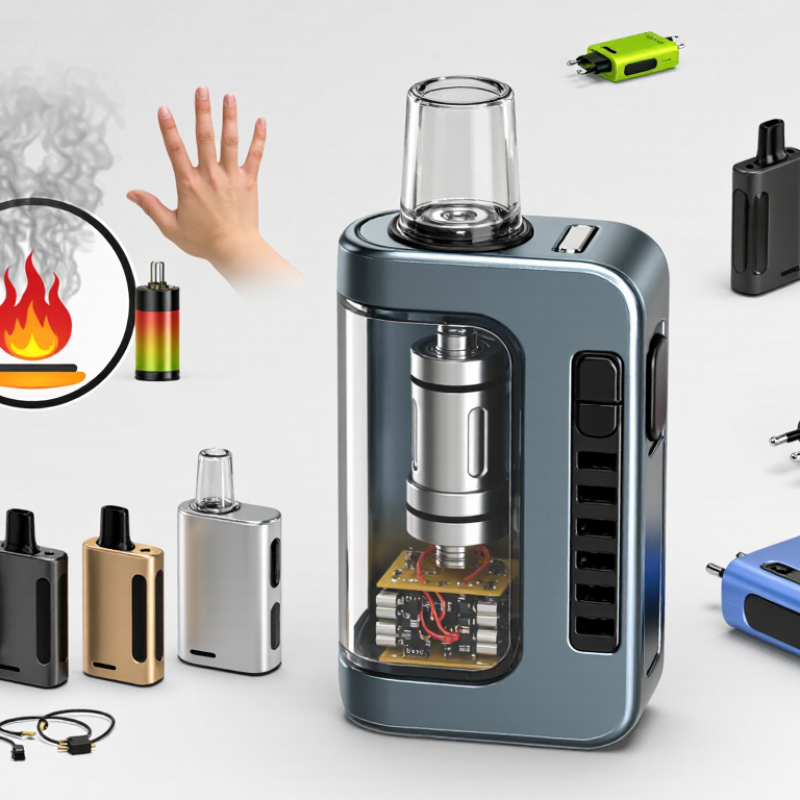
A disposable vape usually combines a sealed battery, a prefilled liquid chamber, and a small heating coil. When the liquid or coil is exhausted, the device is finished. Rechargeable disposables change only one part: they include a charging port and a larger battery. They are often still non-refillable. Rechargeable does not mean reusable forever.
This distinction matters. The FDA and CDC’s 2024 National Youth Tobacco Survey reported that 55.6% of current student vape users used disposable devices. That figure describes product preference, not safety. A rechargeable model may provide enough power for several days, but its liquid chamber and coil still have limited lives. The device can appear functional while producing a burnt taste or weak vapor. That is an easy point to overlook.
Charging requires careful judgment. Use the supplied cable and a compatible power source. Never charge a device that is swollen, cracked, unusually hot, or leaking. Do not leave it charging overnight or on a bed. If no charging port exists, do not open or modify the casing. The U.S. Fire Administration’s 2018 analysis estimated 2,035 e-cigarette explosion and burn injuries treated in emergency departments between 2015 and 2017. Those incidents involved e-cigarette devices generally, not only disposables, but the battery risk remains relevant. Product labels can also be unclear. I would not treat a “rechargeable” claim as proof of safety. Further independent testing is still needed.
A disposable vape should not be recharged simply because it has a charging port. That port may indicate a rechargeable design, but it is not proof of manufacturer approval. Check the printed packaging, instruction leaflet, and official product page for clear wording such as “rechargeable” or charging guidance. A model number matters. Record it before searching, because similar-looking devices can have different batteries.
Look for specific details: the approved cable type, charging time, power rating, and indicator-light behavior. Vague phrases like “charge when needed” deserve caution. A reliable source should identify the exact device, not just a product family. Customer-service support can confirm the information, preferably in writing. Screenshots from social media are weak evidence.
The charging port is not enough.
Do not recharge a device with missing instructions, damaged insulation, liquid around the port, unusual heat, swelling, cracks, or a burnt smell. Never add a cable to a device that was not designed for charging. Even approved models should rest on a hard, nonflammable surface while charging, away from bedding and direct heat. Unplug it when the stated charging period ends. Many users treat a familiar USB connector as a safety guarantee. That assumption is easy to make, and it is wrong. If the manufacturer’s approval cannot be verified, replacing the device through an appropriate disposal route is the safer decision.
| Check Dimension | What to Look For | What It Indicates | Recommended Action | Safety Status |
|---|---|---|---|---|
| Product instructions | The official packaging or user manual clearly says the device is rechargeable and explains how to charge it. | This is the strongest evidence that recharging was designed and approved by the manufacturer. | Follow the stated cable, power source, charging time, and handling instructions exactly. | Potentially approved |
| Charging port | A USB port is present, but the packaging and manual do not mention charging. | A port alone does not prove that the battery, charging circuit, or device enclosure is intended for user recharging. | Do not recharge unless official instructions confirm that the model is rechargeable. | Not confirmed |
| Single-use labeling | The device is described as disposable, single-use, or non-rechargeable. | The product may not include the protection, charging controls, or construction required for repeated charging. | Do not modify, open, wire, or attempt to recharge it. Dispose of it through an appropriate battery or e-waste program. | Do not recharge |
| Battery information | The official documentation identifies the battery and provides compatible charging specifications. | Clear specifications reduce the risk of using an incompatible charger or applying unsuitable charging conditions. | Use only the charging method and power source specified in the official instructions. Never guess electrical ratings. | Required information |
| Physical condition | No swelling, dents, cracks, leaking liquid, corrosion, exposed wires, unusual odor, or heat damage. | Visible damage can indicate a compromised battery or damaged electrical components. | Do not charge or use a damaged device. Keep it away from flammable materials and seek proper battery disposal guidance. | Do not use |
| Charging environment | A cool, dry, well-ventilated, non-flammable surface away from direct sunlight, water, bedding, and combustible materials. | Lithium-based batteries can become hazardous if overheated, short-circuited, or charged in unsuitable conditions. | Charge only in the approved environment and never leave the device charging unattended or overnight. | Use precautions |
| Abnormal behavior while charging | The device becomes unusually hot, swells, leaks, smells unusual, makes sounds, changes shape, or produces smoke. | These can be warning signs of battery failure or a short circuit. | Disconnect power if it is safe to do so, move away from the device, and contact local emergency or waste-safety services if smoke or fire occurs. | Stop immediately |
| Device modification | The casing must be opened, wires added, terminals exposed, or a charging port installed. | Modification can bypass safety controls and create short-circuit, fire, electric-shock, or battery-damage risks. | Never modify or dismantle a disposable vape to recharge it. | Unsafe practice |
| End-of-life condition | The device is empty, malfunctioning, damaged, or no longer holds a charge. | Repeated attempts to revive a failed battery can increase the chance of overheating or internal damage. | Stop using it and take it to a designated battery, electronic-waste, or hazardous-waste collection point where available. | Recycle properly |
Bottom line: A disposable vape should be recharged only when the official product documentation explicitly identifies it as rechargeable and provides charging instructions. A charging port by itself is not sufficient evidence of manufacturer approval.
A disposable vape is usually designed for one battery cycle and one limited service life. If it has no charging port or clear manufacturer instructions, do not connect it to a charger. Improvised wires, adapters, or exposed contacts can send uncontrolled current into a small lithium battery. The device may heat rapidly, swell, leak, or ignite.
The danger is often invisible. A battery can look normal while its internal separator is damaged. Cheap cables and unstable power sources make the problem worse. Never open the casing, puncture the battery, or leave a modified device charging overnight.
Not even briefly. Heat, hissing, a sharp chemical smell, or smoke requires immediate distance. Do not handle a damaged device with bare hands. Follow local fire-safety guidance and approved electronic-waste procedures.
Some rechargeable-looking devices create confusion because similar products use different designs. Check the printed instructions, not online guesses. A charging port alone does not prove safe recharging. Certified charging controls, battery protection, and a compatible power source all matter. Even careful users can misunderstand a label, and that small assumption may carry serious consequences. The safer decision is usually less convenient: stop using an unapproved device rather than testing whether it still works.
A disposable vape is not designed for repeated charging. Its sealed battery, wiring, and casing may lack the controls found in purpose-built rechargeable devices. The U.S. Fire Administration recorded 195 e-cigarette fire or explosion incidents from 2009 to 2016, causing 133 acute injuries. That historical data is limited, but it remains a useful warning.
A safer option is a rechargeable device with documented battery protection and a manufacturer-approved charging cable. Charge it on a hard, nonflammable surface, away from bedding, heat, and direct sunlight. Never use a swollen, cracked, leaking, or unusually hot battery. The U.S. Fire Administration advises stopping use when a battery shows damage or abnormal heating. A protective case also helps prevent accidental contact with metal objects.
For adults trying to reduce nicotine, patches, gum, or lozenges may offer a more controlled alternative. The Centers for Disease Control and Prevention notes that approved cessation medicines can improve quit attempts, especially when combined with counseling. A pharmacist or clinician can help match the option to medical history and nicotine dependence. I would not assume every rechargeable vape is automatically safe; counterfeit chargers and damaged cells can still fail. Even careful users can miss early warning signs. Dispose of damaged batteries through an approved battery-recycling service, not household waste.
Safer Alternatives to Recharging a Disposable Vape
What the chart shows: A typical single-cell lithium-ion battery operates across a limited voltage range: around 3.0 V at the lower protection cutoff, approximately 3.7 V at nominal voltage, and about 4.2 V when fully charged.
Disposable vape batteries and charging circuits are not always designed for repeated charging. Recharging a device that lacks verified charge protection, temperature control, or an appropriate charging connection may increase the risk of overheating, battery failure, or fire.
Safer alternatives: Use a purpose-built rechargeable device with certified charging protection, follow the manufacturer’s instructions, use the supplied charging equipment, and stop using any battery that becomes swollen, unusually hot, damaged, or leaks.
Voltage values are typical reference points for single-cell lithium-ion batteries; exact limits vary by battery design and protection circuitry.
A disposable vape should not be recharged unless it was specifically designed for charging. Its sealed lithium-ion battery may lack adequate protection against overcharging, heat, or physical damage. A bent casing, cracked mouthpiece, swelling, leaking liquid, hissing sound, or unusual smell requires immediate caution. Stop using the device. Disconnect it only if it feels cool and safe to touch.
Never puncture, crush, open, or place an overheating device in a freezer. Move people and flammable materials away. If the device is smoking or burning, leave the area and contact emergency services. Do not carry a smoking battery in your pocket or car. Fire authorities warn that lithium-ion failures can escalate quickly. The U.S. Fire Administration recorded 195 electronic-cigarette fires and explosions, causing 133 injuries and one death, between 2009 and 2016.
A cool but damaged device still needs careful disposal. Place it away from metal objects and combustible materials, then contact a local household hazardous-waste or battery collection service. Do not put it in household trash or standard recycling. The Environmental Protection Agency identifies lithium batteries as a fire risk in waste systems. That advice sounds simple, but many people delay action because the device looks usable. I understand the temptation. It is still a poor gamble. When uncertain, treat the vape as damaged and seek guidance from local fire-safety or waste professionals.
A standard disposable vape has a sealed battery, prefilled liquid chamber, and heating coil. When one part is exhausted, the device is finished. A rechargeable version adds a charging port and larger battery. It may still be non-refillable.
No. Charging restores battery power, not the liquid or heating coil. A device may still work while producing weak vapor or a burnt taste. Its useful life remains limited.
No. Check the packaging, instructions, and exact product page. Look for charging time, cable type, power rating, and light signals. A familiar USB connector proves very little.
Do not guess. Record the model number and seek written confirmation from a reliable support source. Social media screenshots are weak evidence. If approval cannot be verified, replacement is safer.
Stop using a device that is swollen, cracked, leaking, unusually hot, or smells burnt. Liquid near the charging port is a serious warning. Never charge it on a bed, sofa, or near direct heat. I might sound overly cautious, but batteries deserve that caution.
Use the supplied cable and a compatible power source. Place the device on a hard, nonflammable surface. Keep bedding, sunlight, and heat away. Unplug it after the stated charging period.
Consider a rechargeable device with documented battery protection and approved charging instructions. A protective case can reduce contact with metal objects. Still, rechargeable does not mean risk-free. Damaged batteries can fail.
Patches, gum, and lozenges may provide more controlled options. A pharmacist or clinician can consider medical history and nicotine dependence. Counseling may improve quit attempts. No option fits everyone perfectly.
Do not place it in household waste. Use an approved battery-recycling service. Keep the damaged battery away from heat and metal objects meanwhile. Small warning signs matter.
Can disposable vapes be recharged safely? It depends on how the device was designed and whether the manufacturer specifically approved recharging. A truly disposable vape is generally intended for one-time use, while some devices include a built-in rechargeable battery and a designated charging port. The presence of a port alone does not prove that recharging is safe. Users should check the original packaging or official instructions for clear guidance, and should never modify the device, remove its casing, or connect it to an unsuitable power source.
Unauthorized recharging can cause overheating, battery damage, leaks, fire, or other safety hazards, especially when the battery or internal wiring is not designed for repeated charging. A safer alternative is to use a properly manufactured rechargeable device according to its instructions rather than attempting to revive a disposable one. If a vape becomes unusually hot, swollen, cracked, leaking, smells strange, or behaves unexpectedly, stop using it immediately, keep it away from flammable materials, and seek appropriate local guidance for battery or electronic-waste disposal.

Nevra Vape