Can you travel with disposable vapes on a plane? Often, yes—but where you pack them matters. A disposable vape contains a lithium battery, so aviation guidance commonly requires it to stay in your carry-on baggage, not checked luggage. Keep it switched off and protected from accidental activation. Never use or charge it onboard.
The Federal Aviation Administration’s passenger guidance states: “Spare (uninstalled) lithium-ion and lithium metal batteries ... must be carried in carry-on baggage only.” A vape is not a spare battery, but the same battery-safety principle helps explain why airlines restrict these devices to the cabin. Always check your airline’s current instructions, too. Rules can differ by carrier and destination.
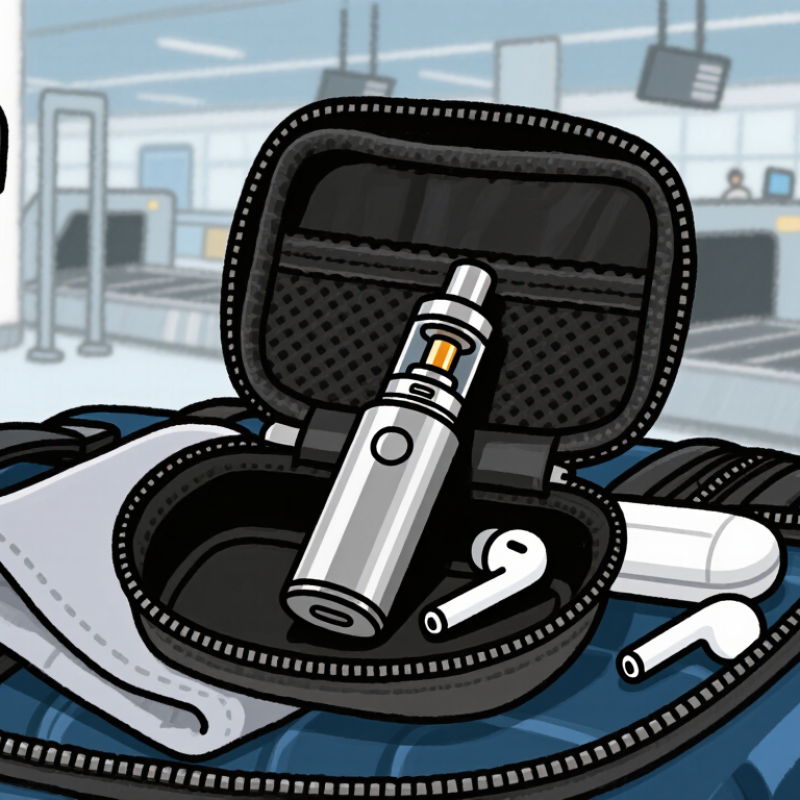
Picture the practical details: a device in a small pouch, away from keys, loose coins, and anything that could press its button. If your carry-on is taken at the gate, tell airline staff that it contains a vape before it goes into the hold. Do not assume the rules are identical everywhere. They are not.
A careful traveler checks official aviation and airline guidance before leaving home, especially for connecting flights. This article will explain what to pack, where to keep it, and what to ask your airline. Small device. Important details. I would not rely on a quote attributed to an unnamed vape-industry expert without a verifiable source; clear, current guidance is more useful than a confident-sounding claim.
What Is a Disposable Vape?
A disposable vape is a compact, battery-powered device designed for use without refilling its liquid tank. Inside, a small heating element warms liquid and produces an aerosol that the user inhales. The device usually has a mouthpiece, a built-in battery, and a prefilled reservoir. Simple parts. Limited control.
The US Centers for Disease Control and Prevention describes e-cigarettes as devices that heat liquid to create an aerosol. Disposable models are one format within that broader category. Some contain nicotine; others do not, so the label and product specifications matter. Grand View Research estimated the global e-cigarette and vape market at US$28.17 billion in 2023. That figure shows the market’s scale, not the safety of any device or ingredient.
For air travel, the built-in battery is a practical detail to notice. It is not the same as carrying an ordinary, battery-free toiletry item. Check your airline’s current instructions before packing, and keep the device protected from pressure or accidental activation. The liquid can also leak if the device is crushed or exposed to temperature changes. Specifications vary, and packaging does not always make them easy to interpret. I would not assume that every disposable model handles travel in the same way.
Why Disposable Vapes Must Stay in Carry-On Baggage
Disposable vapes must stay in carry-on baggage because their lithium batteries can overheat if damaged or short-circuited. The FAA’s PackSafe guidance requires these devices to travel in the cabin, not checked luggage. IATA’s Dangerous Goods Regulations also specify cabin carriage and protection from accidental activation. The rule can feel fussy. Still, a bag in the cabin is easier to monitor than one in the cargo hold.
The FAA recorded 89 incidents involving lithium batteries that produced smoke, fire, or extreme heat aboard aircraft in 2024. This figure covers many battery-powered items, not just vapes. It shows why careful handling matters. Keep the device switched off, and protect its button from pressure in a crowded bag. If staff ask you to check your carry-on at the gate, remove the vape first.
Do not charge or use the device during the flight. Check your airline’s current instructions, since cabin procedures can differ. A disposable device may seem sturdy, but its battery is still easy to overlook. That small detail deserves a second look before you leave home.
How to Pack a Disposable Vape for Air Travel
How to Pack a Disposable Vape for Air Travel
Pack a disposable vape in your cabin bag, not checked luggage. Its lithium battery can pose a fire risk if damaged or overheated. Switch it off if possible, and use a small case to prevent accidental activation. Keep it away from keys, coins, and other objects that could press its button. If your bag is gate-checked, remove the vape and keep it with you. Rules can vary by airline and airport, so check their current guidance before leaving home.
Tips: Keep it accessible. Don’t use or charge the device during the flight. Avoid packing it beside liquids or anything that could crush it. A little extra care helps prevent leaks and damage, though it may not prevent every problem.
Before packing, inspect the device for cracks, swelling, or signs of leakage. Don’t bring a damaged vape; ask your airline how to handle it safely. I still double-check the rules before travel, because policies can change and wording is not always clear. Keep the vape secure, and follow crew instructions if your carry-on must be stored elsewhere.
Can You Travel With Disposable Vapes on a Plane? - How to Pack a Disposable Vape for Air Travel
| Travel question |
General guidance |
Packing tip |
| Can I bring one on a plane? |
In the United States, vaping devices with lithium batteries must be carried in the cabin, not in checked baggage. Airline and destination rules may differ. |
Keep it in your carry-on bag or on your person, and check the rules for every airline and destination on your itinerary. |
| Can I pack it in checked luggage? |
No. U.S. aviation rules prohibit packing e-cigarettes and vaping devices in checked baggage because of their batteries. |
Before checking your suitcase at the gate, remove the device and keep it with you in the cabin. |
| How should I prevent activation? |
A device must be protected from accidental activation and damage while being transported. |
Use a protective case, keep it away from keys and other objects, and follow any instructions provided with the device. |
| Can I use or charge it during the flight? |
No. U.S. rules prohibit using or charging vaping devices aboard an aircraft. Airline instructions also apply. |
Keep the device stowed throughout the flight and do not connect it to an onboard power outlet or USB port. |
| What about spare batteries? |
Spare lithium batteries must be carried in the cabin, not checked, and protected against short circuits. Battery limits and conditions may vary by airline. |
Cover exposed terminals or place each spare battery in a separate protective case. Do not carry damaged or recalled batteries. |
| Can I bring extra e-liquid? |
For U.S. airport screening, separate liquid containers in carry-on baggage generally must follow the TSA liquids limit: 3.4 fl oz (100 mL) or less per container, packed in a quart-size bag. |
Keep extra liquid in a compliant, leak-resistant container. Check the screening rules at airports outside the United States. |
| What if the device leaks? |
A leak can damage belongings and may create a mess during travel. |
Place the device in a small sealed bag or protective case, and keep it upright when practical. |
| Are vapes legal at my destination? |
Possession, import, and use rules vary by country and region. Some destinations restrict or prohibit vaping products. |
Check current official customs and local laws before departure, including rules for transit stops. |
Rules can change and may vary by airline, airport, and destination. Confirm requirements with your airline and relevant authorities before travel.
Can You Use or Charge a Vape During a Flight?
Can You Use or Charge a Vape During a Flight?
No. Do not use or charge a disposable vape during a flight, even if it has a USB port. Aviation safety guidance prohibits onboard use and charging because lithium batteries can overheat, smoke, or ignite. Keep the device in your carry-on or on your person, where crew can respond if it becomes hot or damaged. Never in checked baggage. Protect it from accidental activation, and follow your airline’s packing instructions.
This caution is grounded in real incidents. The FAA’s 2023 lithium-battery incident data recorded 77 onboard events involving smoke, fire, or extreme heat. The figure covers many kinds of battery-powered items, not vapes alone, but it shows why cabin access matters. A warm device tucked in a suitcase is harder to spot quickly. A vape can also be easy to forget when reaching for a seat’s USB outlet. Don’t plug it in. Airline policies can differ, so check your carrier’s current guidance before leaving home; the cabin crew’s instructions take priority.
Which Airline and Destination Rules Should You Check?
Before packing a disposable vape, check the airline’s current rules for electronic devices and spare batteries. Policies can differ, even between carriers on the same route. Most airlines require battery-powered vapes to travel in cabin baggage, not checked luggage, but confirm this directly. Keep the device protected from accidental activation. Do not use or charge it during the flight. Rules can change.
Then check the destination’s official customs or public-health guidance. Some places restrict bringing in vaping devices, nicotine products, or particular liquid strengths. A layover matters, too: you may need to follow the rules of a transit country, especially if you collect your bags or leave the airport. Check every stop, not just your final destination. Airport websites can be useful, but government guidance is usually clearer about import requirements.
Save the relevant pages or contact the airline if the wording is unclear. Ask specifically whether a sealed disposable device is allowed in cabin baggage and whether quantity limits apply. Keep it easy to reach, rather than buried beneath clothes at the bottom of your suitcase. I once assumed a short connection meant fewer rules; that was a poor assumption. Small details matter.
Can You Travel With Disposable Vapes on a Plane?
U.S. flight baseline: where a vape may be carried or used.
1 = permitted; 0 = prohibited. Under U.S. aviation rules, vape devices must go in carry-on baggage, not checked baggage. Using or charging them onboard is prohibited. Airline policies and destination laws may be stricter, so check both before departure.
Conclusion
A disposable vape is a compact, single-use electronic device that contains a battery and is designed to be discarded when its power or contents run out. If you’re wondering, “can you travel with disposable vapes,” the answer depends on the airline and your destination’s current requirements. Because these devices contain batteries, they generally need to travel in carry-on baggage rather than checked luggage. Before packing, make sure the device is switched off, protected from accidental activation, and stored securely to reduce the chance of damage or leaks.
Do not use or charge a vape during a flight. Before leaving, check your airline’s guidance on carrying and storing vape devices, and confirm that your destination permits their transport and possession. Rules can vary between carriers and locations, so checking official, up-to-date information helps you plan ahead and avoid surprises.

 Nevra Vape